
The Dating App Slump of 2026: What Tinder’s Decline, Hinge’s Growth, and the Offline Boom Mean for Men
By Derek Kane
Here is a number you will not hear from the apps’ marketing teams. Match Group, the company behind Tinder and Hinge, told investors on August 4, 2026 that its paying users fell 6 percent in the second quarter to 13.3 million. That is the fifth straight quarter of decline in its user base. Revenue slipped 1 percent to $853 million. The company is still highly profitable, but the trend underneath the profit is hard to miss: fewer people are paying to date on apps, and the ones who are paying want something different from what they wanted five years ago.
If you are a man who has spent the last couple of years swiping with little to show for it, this is not a coincidence, and it is not just you. The ground under online dating is shifting, and the men who adjust early will have a real advantage. This guide breaks down what the numbers actually say, why singles are burned out, why Hinge is growing while Tinder shrinks, what daters say they want in 2026, and a practical playbook for men who want to date smarter instead of swiping harder.
What the Numbers Actually Say
Start with Match Group’s own filings, because they are the hardest data available. In the second quarter of 2026, total paying users fell to 13.3 million from 14.1 million a year earlier. Revenue per payer rose 6 percent to $21.13, which is how revenue fell only 1 percent while the user base fell 6. Net income actually rose 36 percent to $171 million. In other words, the company is making more money from fewer people, which is exactly what you see when a market matures and users get pickier about what they pay for.
Tinder, the biggest brand, is the story within the story. Its paying users fell 5 percent to 8.5 million, its monthly active users were down 7 percent year over year, and its direct revenue of about $457 million sits below the roughly $491 million it hit at its peak in the third quarter of 2025. But Tinder is not dead. Its daily active user decline narrowed to 4 percent, the best in ten quarters, and in March 2026 its registrations returned to year-over-year growth for the first time in nearly two years. Management says it expects Tinder’s paying-user growth to return only by the fourth quarter of 2027, so this is a slow turnaround, not a collapse.
Hinge is the opposite picture. Its direct revenue rose 22 percent to about $204 million, its paying users jumped 17 percent to 2.0 million, and its monthly active users grew 13 percent. It entered six new European countries in the quarter and is targeting $1 billion in revenue in 2027. The takeaway is simple: people have not given up on dating apps. They have given up on the swipe-everything model, and they are migrating to apps built around intention.
Why Singles Are Burned Out
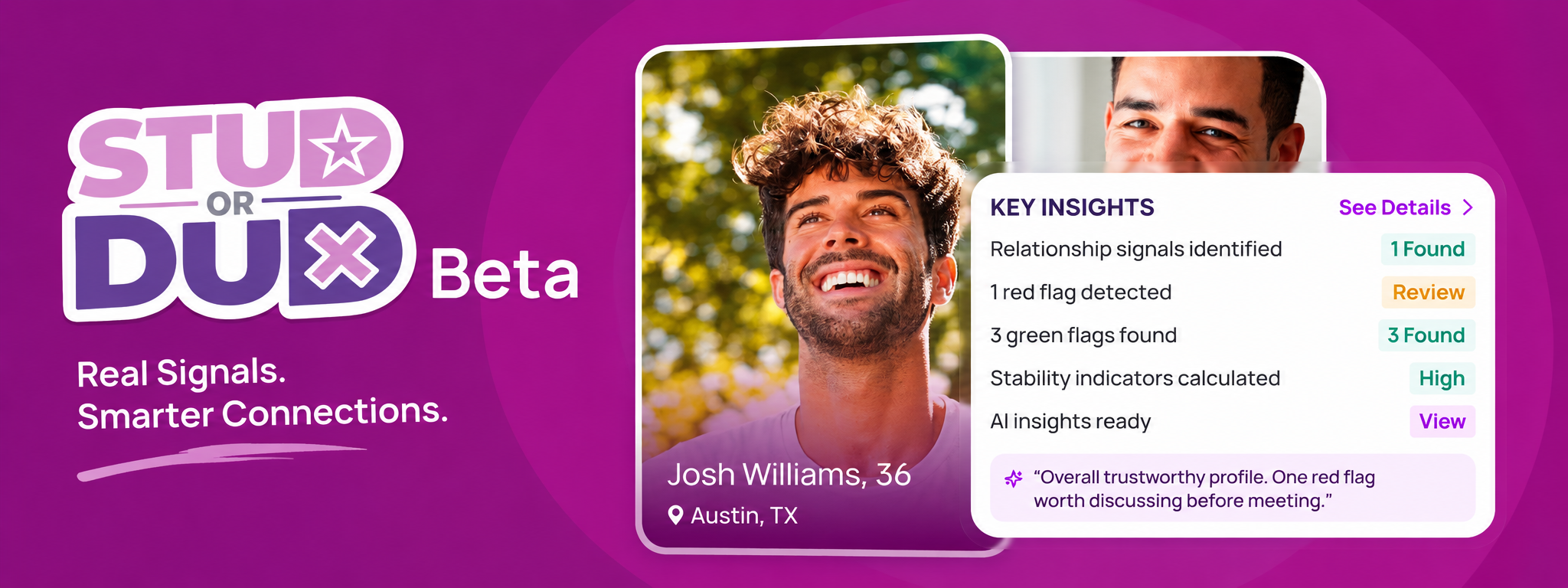
Dating app fatigue is not a vibe. It is a measurable feeling, and the reasons are well documented. The first is trust. According to Pew Research Center, only 48 percent of Americans say online dating is a generally safe way to meet people, down from 53 percent in 2019. More than half of dating app users, 52 percent, say they have come across someone they believed was trying to scam them, and the figure is 63 percent among men under 50. We covered the scam side in our guides to Stud or Dud and honeypot robberies.
The second reason is the experience itself. Endless matches that go nowhere, conversations that fizzle, and disappearing acts all pile up, and we broke down the research on that last one in our ghosting guide. The third is cost and effort. Between subscription tiers, boosts, and the time spent managing conversations, dating on apps has started to feel like a part-time job with no guarantee of payoff. And the fourth is the lopsided math for men, which we laid out in our online dating reality check. Pew found that 34 percent of men have used a dating site or app compared with 27 percent of women, so the competition among men is real.
Why Hinge Is Growing While Tinder Shrinks
The simplest explanation is intention. Hinge built its brand around people who want to actually date, with prompts that start conversations and a stated goal of getting users off the app and into relationships. Tinder, by contrast, spent years as the app for swiping, and it is now trying to rebuild itself around what young daters want. One number from the earnings reports captures the difference. Hinge’s revenue per payer was $33.11 in the second quarter, versus $17.90 at Tinder. Daters are willing to pay more for tools designed around real connection.
The lesson for men is not to download one app and delete another. It is that the intention-first model is winning, and that your profile, your messages, and your approach should reflect it. The men who do best on any platform in 2026 are the ones who show up as clear, consistent, and ready to meet.
What Singles Say They Want Now
Dating trend research from Tinder and Plenty of Fish, as reported by outlets including The Every Girl, points to a few shifts. Tinder’s data describes what it calls "emotional vibe coding," sometimes called clear-coding: 56 percent of singles said honest conversations matter more than anything, and nearly half said they want more empathy shown after a rejection. Tinder also found that friends increasingly shape who singles match with, with many going on more group and double dates, a trend it describes as dating by committee.
The dates themselves are getting simpler. Instead of elaborate dinners, the trend is toward coffee walks and low-pressure hangouts, with less performance and more actual conversation. Plenty of Fish coined the term "chemRIZZtry" for catching unexpected chemistry with someone outside your usual type purely through charisma, and reports that about one in four singles has experienced it. The common thread is that daters are tired of posturing. They want clarity, kindness, and conversation that feels real.
The Offline Boom
As the apps slump, in-person dating is getting a second life. Singles events, run clubs, activity-based meetups, and matchmaking services are all growing, and even Match Group has been promoting in-person events as part of its strategy, according to investor materials. That does not mean apps are over. It means the smartest daters are using several channels at once, with apps as one tool among many.
For men, this is good news. In person, you are more than a few photos and a bio. Your voice, your posture, your humor, and your presence all count, and those are the areas where most men have more room to improve than they realize. Our guide to martial arts and dating covers one of the best ways to build the confidence that carries into real-world interactions, and any activity that puts you around women in a natural setting does the same job.
What This Means for Men: A Playbook
1. Treat apps as one channel, not the whole plan. Set a time limit, such as 20 minutes a day, and spend the rest of your dating energy in the real world.
2. Say what you want. Clear-coding works in your favor. A profile that states your intentions attracts people who want the same thing and saves you from months of mixed signals.
3. Move conversations forward quickly. A few days of messaging, then a call or video chat, then a coffee walk within a week or two. Long text threads are where interest goes to die.
4. Build a real-world rotation. Pick two activities a week where you will naturally meet women: a gym or martial arts class, a run club, a climbing gym, volunteering, a class in something you actually enjoy. Show up consistently, and let familiarity do the work.
5. Use your social circle. Dating by committee is a real trend for a reason. Tell friends you are open to meeting people, say yes to group plans, and let people you trust vouch for you.
6. Keep dates simple and cheap. A coffee walk tells you more than an expensive dinner, and it takes the pressure off. Our Affordating guide has ideas that still feel like real dates.
7. Verify, then meet. Confirm someone is real with a quick video chat and a reverse image search before you meet, and meet in public. A records check like Stud or Dud is one extra layer for people you are serious about.
8. Handle rejection like an adult. If someone is not interested, accept it and move on. If you are not interested, say so in one honest sentence instead of disappearing, as we explain in the ghosting guide.
9. Look after your fundamentals. Sleep, training, and nutrition affect your energy, mood, and confidence more than any opening line will. Our self-assessment on testosterone and confidence is a good place to start.
Where Clear-Intention Platforms Fit
The clear-coding trend is not limited to Hinge. Platforms where members state upfront what they want, whether that is something casual, something ongoing, or just conversation, save everyone time. On AdultFriendFinder, for instance, members list their intentions in their profiles, which means less guessing and fewer mixed signals. If you want to meet people who say what they mean, start here.
Will the Apps Come Back?
Probably in a different form. Tinder’s turnaround is real but slow, Hinge is expanding into new countries, and the whole category is adapting to what singles are asking for: honesty, lower pressure, and more real-world connection. The apps are not going away. They are being forced to change, and the men who change with them will do better than the ones still swiping the way they did in 2019.
Frequently Asked Questions
Are dating apps dying?
Not exactly. Match Group’s paying users fell 6 percent to 13.3 million in the second quarter of 2026, the fifth straight quarterly decline, but Hinge is growing fast and Tinder’s engagement trends are improving. The apps are shrinking and shifting, not disappearing.
Is Tinder dying?
No. Tinder’s paying users fell 5 percent to 8.5 million and its monthly active users fell 7 percent, but its daily active user decline narrowed to 4 percent and its registrations returned to growth in March 2026. Management does not expect paying-user growth until the fourth quarter of 2027.
Why is Hinge growing?
Hinge is built around intention and real dates, and its revenue per payer was $33.11 in the second quarter versus $17.90 at Tinder. Its direct revenue rose 22 percent and its paying users grew 17 percent.
What is dating app fatigue?
It is the burnout that comes from endless swiping, matches that go nowhere, ghosting, scams, and the cost and effort of keeping up. Pew found that only 48 percent of Americans think online dating is generally safe.
What is clear-coding in dating?
It is stating what you want and being honest in conversation from the start. Tinder’s trend research found that 56 percent of singles say honest conversations matter more than anything.
Is offline dating better than apps?
Neither is better by itself. The best approach is to use both: apps for volume and convenience, and real-world activities where your personality and presence can show.
How should men adapt to the dating app slump?
Cap your app time, state your intentions clearly, move conversations to a call or coffee quickly, build a rotation of real-world activities, use your friends, and keep your fundamentals strong.
Are dating apps safe?
Use caution. Pew found that 52 percent of users believe they have encountered a scammer, and 63 percent of men under 50. Verify people before you meet, meet in public, and never send money.
The Bottom Line
The dating app slump is real, and Match Group’s own numbers prove it: fewer payers, a shrinking Tinder, and a Hinge that keeps growing on the strength of intention. The deeper trend is that singles are done with performance and want honesty, simplicity, and real connection. For men, that is an opening. Show up clear, consistent, and in person, and you will stand out in a market where most people are still swiping and hoping.
Interested in a link exchange with Real Entertainment Media? Our readers come here for straight, well-researched content on dating and modern relationships, which is exactly why they trust what we link to. We’re always open to swapping links or collaborating on guest posts with other sites in this space when it’s a genuine fit for both sides. Email marketing@realentertainmentmedia.com with the subject line “Att: Advertising REM,” or see more about working with us on our advertising page.
Looking for more? The Adult Entertainment hub covers everything else we publish, Educational Content has more guides like this one, Enhance Your Love Life is where the gear lives, and Casual Dating & Hookups is the shortcut when you want clear intentions from the first message.






















No Comments Yet